
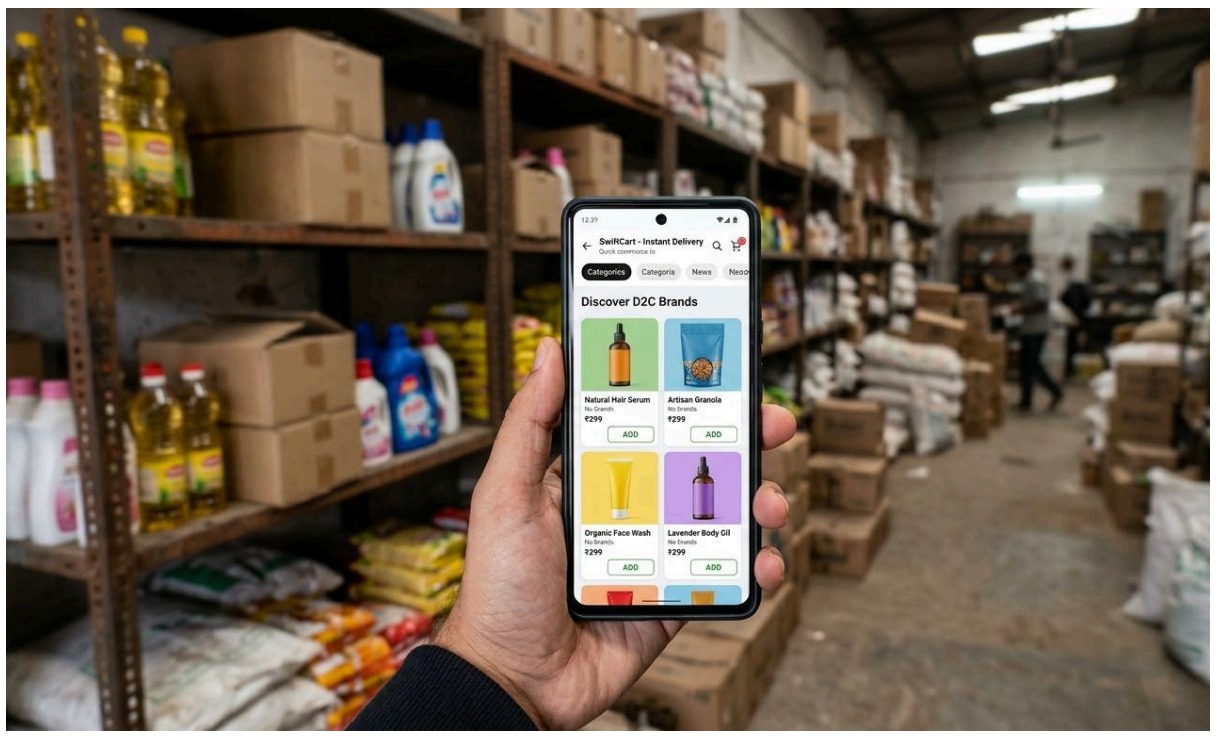
India’s fast moving consumer goods sector is undergoing a quiet but decisive shift, one that is not playing out in kirana stores or supermarket aisles, but on the rapidly expanding interfaces of quick commerce platforms. What was once defined by physical shelf placement is now determined by digital visibility, fulfilment speed, and platform level execution.
Open Blinkit or Zepto today, and the brands that dominate visibility are often digital first names such as Mamaearth, Wow Skin Science, and MCaffeine. Many legacy players, including Dabur, Himalaya, and Vicco, appear less prominently or inconsistently.
This is not incidental. It reflects a deeper structural transition in how retail shelf space is being defined in India’s fastest growing distribution channel.
The Rise of Quick Commerce and Enablement Infrastructure
The scale of this shift is backed by numbers. According to Mordor Intelligence, India’s quick commerce market is projected to reach $3.65 billion, underscoring the speed at which consumer adoption is accelerating. Complementing this, SaaSUltra estimates that grocery and FMCG categories on quick commerce platforms are growing at 38 percent year on year.
For decades, legacy FMCG companies built their dominance through expansive distributor networks and deep general trade penetration. However, quick commerce operates on a fundamentally different logic, one that prioritises speed, localisation, and real time execution.
This shift is also driving the emergence of quick commerce enablement platforms, designed to help brands adapt to this new ecosystem. Among these players is PickQuick, which is beginning to play a role in helping legacy brands navigate platform-first retail.
Why D2C Brands Are Winning the Visibility Game
Direct to consumer brands entered this ecosystem with a natural advantage. Built in the digital era, they were already attuned to platform algorithms, demand forecasting, and rapid inventory cycles. They understood dark store economics and city level fulfilment early, allowing them to integrate seamlessly into quick commerce platforms.
More importantly, D2C brands treat quick commerce not just as a distribution channel, but as a discovery engine. They invest in platform visibility, optimise product listings, and adapt packaging and pricing formats specifically for impulse driven purchases.
Data from Datum Intelligence adds an important nuance. While legacy brands account for nearly 65 percent of sales when present on platforms, only 491 out of 2,777 brands contribute to 80 percent of total sales. The issue is not demand, but inconsistent presence and limited visibility.
The Structural Gap in Legacy FMCG Supply Chains
Legacy FMCG companies were optimised for scale in a very different system. Their supply chains were designed for bulk movement and periodic replenishment, not for the high frequency, hyperlocal demands of quick commerce.
Distributor led models, while highly effective in traditional retail, were not built for real time inventory syncing or platform specific compliance requirements. The result is a structural mismatch that limits their ability to compete effectively in this new environment.
This gap has especially led to the creation of a category that did not exist a few years ago: quick commerce enablement. Platforms like PickQuick have emerged to solve this exact problem for legacy brands, bridging the disconnect between traditional supply chains and real time retail expectations.
How PickQuick Is Bridging the Gap for Legacy Brands
As legacy brands respond to this shift, PickQuick is emerging as a key execution partner helping them establish a meaningful presence on quick commerce platforms by handling end to end onboarding and distribution across Blinkit, Zepto, and Swiggy Instamart for legacy FMCG companies, simplifying what would otherwise be a fragmented and resource intensive process.
Currently, PickQuick works with over 47 legacy FMCG brands and operates across more than 31 cities in India, reflecting growing adoption among companies looking to scale in this channel.
Brands go live on multiple quick commerce platforms simultaneously without building separate operational frameworks for each, significantly reducing time to market and execution complexity.
The Race for Relevance on Convenience First Platforms
The stakes are significant. Consumer habits are being formed in real time on quick commerce platforms, particularly among younger, urban users. A consumer who discovers a brand on Zepto today is likely to continue purchasing it out of convenience and familiarity.
In this environment, visibility is not just about immediate sales, but long term relevance. Brands that fail to establish a presence risk losing an entire cohort of consumers who default to quick commerce for everyday needs.
The rise of these quick commerce enablement platforms signal that legacy brands are no longer willing to sit on the sidelines of quick commerce. As platforms like PickQuick scale, legacy brands finally have a viable path into 10 minute delivery, a capability that is fast becoming the new benchmark in urban consumption.
For legacy FMCG companies, the challenge is no longer about recognising the shift. It is about moving quickly enough to adapt. In a landscape where digital shelves are replacing physical ones, platforms like PickQuick will increasingly determine which brands remain visible and which fade into the background.
